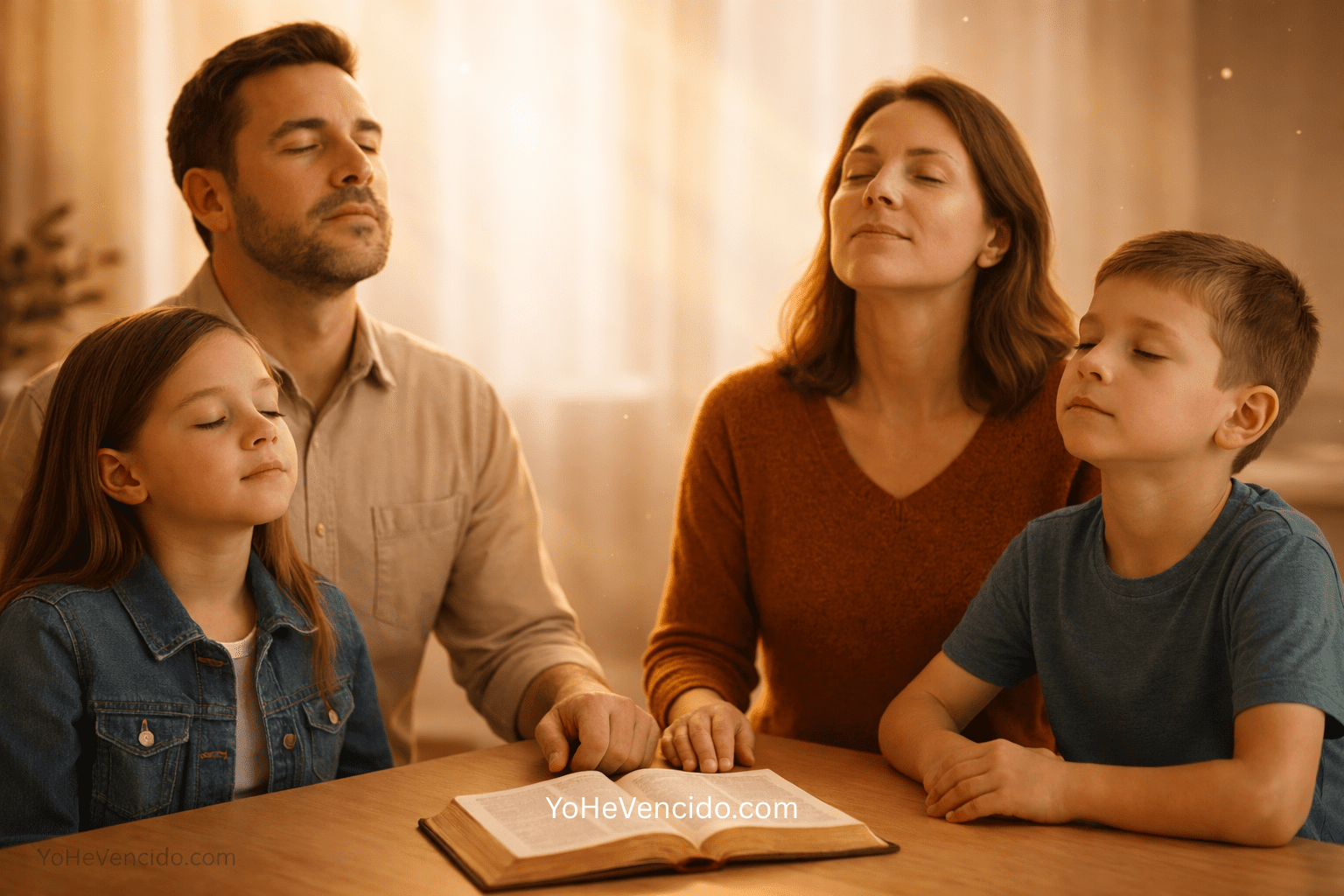
Psalm 127 — The House That God Builds
Psalm 127 Explained: The House God Builds
Psalm Psalm 127 is part of the Gradual Chants (Psalms 120–134), hymns that the people of Israel sang as they went up to Jerusalem to worship. Attributed to Solomon, this psalm introduces a central teaching of biblical wisdom: God does not oppose human work, but He confronts every life, family, or project that attempts to build itself without His guidance.
Although it is a short psalm, its message is profound and entirely relevant. Psalm 127 It reveals that there are efforts that seem productive, but end in vanity; tasks that fill the daily agenda, but leave the soul empty; family projects and personal goals that rise strongly, but lack a solid foundation when God does not occupy the central place.
From the beginning, this psalm invites us to examine how we are building our house. —not only in a physical sense, but also spiritually, familially, and personally. It doesn't question the value of effort, but rather the source of our confidence. It does not correct diligence, but the self-sufficiency that excludes God from the process.
Therefore, before proceeding with the study, the text confronts us with a key question that will mark the entire development of the Psalm 127:
Am I building my house with God, or simply for God without truly depending on Him?
Because you can talk about God, serve Him, and even invoke His name, and still live as if He were not the Architect of what we are building.
Psalm 127 (RVR1960)
1Unless the Lord builds the house,
Those who build it labor in vain;
Unless the Lord watches over the city,
The guard keeps watch in vain.
2 It is pointless for you to rise early in the morning, and go to bed late at night,
And that you eat the bread of sorrows;
For God will give sleep to his beloved.
3 Children are a heritage from the Lord,
The fruit of the womb is a precious thing.
4 Like arrows in the hands of a warrior
That's how children born in youth are.
5 Blessed is the man whose quiver is full of them.
He will not be ashamed
When will I speak with the enemies at the gate?
I. God as the foundation of all work (Psalm 127:1)
Before discussing effort, plans, or results, the psalm establishes a non-negotiable foundation: God must be the foundation of all human work.This statement is not symbolic or optional; it is absolute. Psalm 127:1 confronts us with a truth that runs throughout Scripture: without God's intervention, even the most diligent work ends up being empty and fragile.
The psalm begins with a direct and unambiguous statement:
if God does not build, human labor becomes in vain.It is not a lack of talent, discipline, or intention, but a lack of spiritual foundation.
The “house” mentioned in the text represents much more than a physical structure. In biblical language, the house symbolizes:
home and family life,
personal life and character,
the projects, the work, and the ministry,
the spiritual legacy that one leaves to others.
Therefore, the psalm is not limited to the physical structure; it points to the heart of everything that human beings attempt to build. A house can appear sturdy on the outside and yet be spiritually unstable if God is not the one who sustains it.
God is not against human effort, but He does confront self-sufficiency.It's not enough to work hard or have good intentions; it's necessary to build according to God's will.When He is not the Architect, everything built is exposed to wear, confusion, and spiritual collapse.
Scripture clearly confirms this:
“Commit your works to the Lord,
and your thoughts will be affirmed.”
(Proverbs 16:3)
Order is key: first, the works are entrusted to God, and then He affirms the thoughts. When that order is reversed, the effort continues… but without direction, without stability, and without eternal fruit.
II. The false security of human control (Psalm 127:1b)
After discussing building, the psalm directs attention to another critical point in human life: the search for security.In the second part of verse 1, Psalm 127 confronts man's tendency to rely on his own systems of control, surveillance, and protection, reminding us that no security is absolute when God is left out of the center.
The text clearly states:
“Unless the Lord guards the city, the guard watches in vain.”
This statement does not deny human responsibility or discredit surveillance; rather, it reveals a deeper truth: Ultimate security is not in the hands of man, but in God.
Humans can plan, protect, and monitor, but only God has dominion over the unforeseen. There are variables that no security system can anticipate, and it is precisely there that the fragility of human control becomes evident. When trust is placed solely in human methods, the result is not peace, but constant anxietyemotional exhaustion and a persistent sense of vulnerability.
Psalm 127:1b does not condemn preparation; it confronts the illusion of control.It reminds us that a city can be well protected on the outside and still be exposed on the inside when God is not the one guarding it.
Scripture reaffirms this truth with a powerful image:
“The name of Jehovah is a strong tower;
The righteous will run to him and be lifted up.”
(Proverbs 18:10)
Biblical security does not rely on walls, guards, or strategies, but on a living relationship of dependence on God. When He is our refuge, human vigilance finds its proper place; when He is not, all protection becomes insufficient.
III. Work without faith produces anxiety, not peace (Psalm 127:2)
After confronting self-sufficiency in construction and the false security of human control, the Psalm 127 It directs its focus to the inner rhythm of the heart. Verse 2 describes a lifestyle marked not by healthy diligence, but by... constant eagerness which arises when work replaces trust in God.
The text expresses it with strong and revealing words:
“It is pointless for you to rise early in the morning… and to eat the bread of sorrow.”
Here, Psalm 127 does not condemn effort or discipline, but rather a way of life governed by anxiety. The “bread of sorrows” symbolizes a provision obtained at the cost of anguish, constant stress, and inner exhaustion.
Working is not a sin; the problem arises when work becomes a substitute for faith.When sustenance, security, and personal worth rest solely on human effort, the result is not peace, but exhaustion. Striving consumes the soul's strength, robs it of joy, and produces a weariness that goes beyond the body: a spiritual weariness.
Psalm 127 reminds us that God is not only interested in what we do, but also in... how do we do it And from where we do it. There is a big difference between working trusting in God and working driven by the fear of losing control.
Scripture offers a clear contrast between anxiety and peace:
“Do not be anxious about anything,
but let your requests be made known to God…
and the peace of God, which surpasses all understanding,
He will guard your hearts and your thoughts.”
(Philippians 4:6–7)
Where faith reigns, work finds balance. Where trust in God is lacking, effort multiplies… but peace disappears.
IV. Rest as a sign of trust (Psalm 127:2b)
After confronting the yearning that wears down the soul, the Psalm 127 It introduces a powerful contrast: the rest that comes from trusting in God. Verse 2 speaks not only of sleep, but of a life that has learned to let go of control and rest under the Lord's rule.
The text states:
“For God will give sleep to his beloved.”
Here, sleep symbolizes much more than physical rest. It represents inner peace, spiritual security, and complete trust in GodSleeping without anxiety becomes a silent declaration of faith: God continues to work even when we rest.
This rest is not laziness or irresponsibility; it is a spiritual actThe believer who truly trusts in God can rest without guilt, knowing that his life does not depend exclusively on his own effort, but on the faithfulness of the Lord.
Scripture clearly confirms this truth:
“In peace I will lie down and sleep;
because you alone, Jehovah,
"You make me feel confident."
(Psalm 4:8)
When God rules the heart, rest ceases to be a luxury and becomes a sign of mature faith.
V. Children as a divine inheritance (Psalm 127:3–4)
At this point, the Psalm 127 It shifts its focus and turns its gaze toward family. After discussing work, security, and rest, the psalm reveals that one of God's most sacred gifts is not material, but relational.
The text states:
“Children are a heritage from the Lord…”
Calling children an "inheritance" completely redefines how they should be viewed. An inheritance is not produced, it is received; it is not possessed absolutely, it is managed responsibly.
From a biblical perspective, children:
They come from God,
They possess eternal value,
are trusted for a time,
They require intentional spiritual training.
Children are not an accident or a burden; they are a sacred responsibility.Raising them involves much more than meeting their material needs. It means guiding them, affirming them, and shaping them according to God's purpose for their lives.
The Word expresses it directly:
“Train up a child in the way he should go,
and even when he is old he will not depart from it.”
(Proverbs 22:6)
Inheritance is not measured by what is left behind, but by what is sown in the heart.
VI. Children like arrows: training, direction and purpose (Psalm 127:4)
To delve even deeper, the Psalm 127 It uses an image laden with spiritual meaning: children as arrows in the hands of the warrior. This metaphor is not accidental; it reveals the active and formative purpose of biblical upbringing.
An arrow cannot fulfill its function on its own. To be effective, it must:
to be formed carefully,
to be directed towards a specific target,
to be launched at the right time.
Similarly, raising children according to God's will seeks not only to protect, but prepareGod-fearing parents do not raise children to conform to the world, but to fulfill the purpose of the Kingdom.
Raising children like arrows involves intention, vision, and dependence on God. It's not about controlling their future, but about aligning them with God's plan so that, when the time comes, they can be sent forth with direction, identity, and faith.
VII. The visible blessing of a house built by God (Psalm 127:5)
Psalm Psalm 127 It concludes by showing the visible fruit of a life, a family, and a home built under God's guidance. After speaking of foundation, security, work, rest, and nurturing, the psalm presents the final result: a blessing that manifests itself even in the midst of opposition.
The text states:
“He will not be ashamed when he speaks with his enemies at the gate.”
In the biblical context, the city gate It was the public arena of authority, judgment, legal decisions, and reputation. It was where a person's character was examined and their integrity tested.
A house built by God does not guarantee the absence of conflict, but it does guarantee the firm.It produces honor, stability, and spiritual support even when voices of opposition arise. The believer is neither exposed nor ashamed, because their foundation is not in public opinion, but in God's approval.
This verse reminds us that divine blessing is not always silent or private. When God builds a house, His work becomes evident in the visible areas of life as well: in relationships, in our witness, and in how we face adversity.
Psalm 127 concludes by affirming that a family aligned with God walks in safety, not because of the absence of enemies, but because God Himself endorses what He has built.
Rebuilding with God at the center
Psalm Psalm 127 It leaves us with a lesson as clear as it is challenging: not everything built with effort is built with wisdom. Throughout the psalm, Scripture shows us that the problem isn't working, planning, or caring, but rather doing it. without fully depending on God.
When God is not the foundation, the work becomes futile.
When God does not protect, security turns into anxiety.
When faith is replaced by greed, peace disappears.
But when God builds, protects, and governs, the result is rest, stability, and visible blessing.
This psalm invites us to examine how we are building our house.Our spiritual life, our family, our work, and the legacy we leave behind are all important. It's not enough to do things "for God" if we aren't truly living with God in every area. True building begins when control is surrendered, trust is affirmed, and the heart returns to placing God as the chief Architect.
A house built by God is not perfect, but it is firm. It is not free from opposition, but it walks with support. It does not depend on human recognition, because it rests on the Lord's faithfulness.
The final message is clear:
back to basics, realign priorities and allow God to build what truly lasts.
𝓑𝓮𝓷𝓭𝓲𝓽𝓸 𝓼𝓮𝓪 𝓙𝓮𝓱𝓸𝓿𝓪,
𝓮𝓵 𝓓𝓲𝓸𝓼 𝓭𝓮 𝓘𝓼𝓻𝓪𝓮𝓵,
For ever and ever.
𝓐𝓶𝓮́𝓷 𝔂 𝓐𝓶𝓮́𝓷.
— Psalm 41:13