
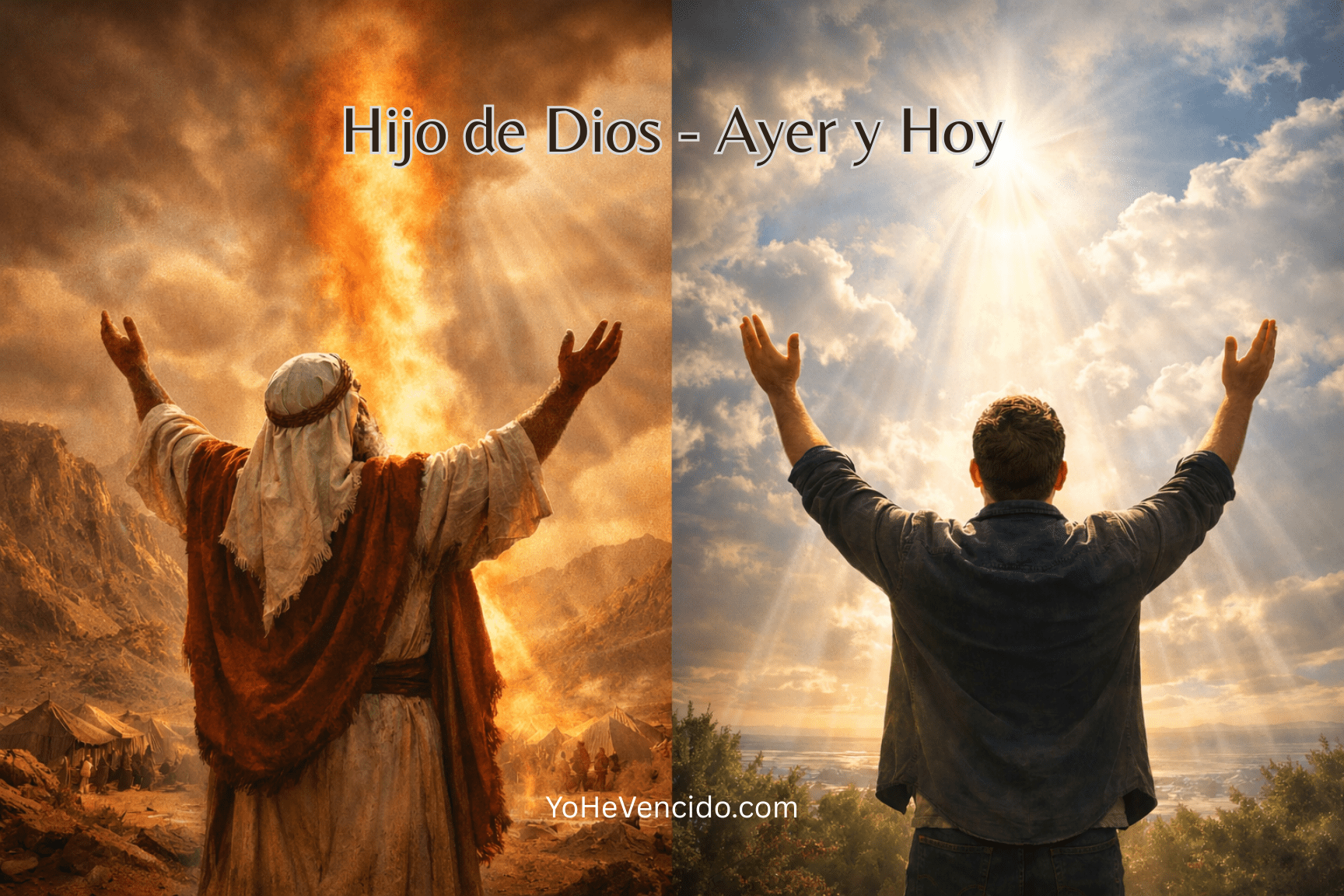
Son of God: Identity, Inheritance, and the Guarantee of the Holy Spirit
Introduction: A truth that anchors the soul
We live in a generation marked by profound change, identity confusion. The world offers multiple labels to define human beings: what they do, what they possess, what they have achieved, or even the wounds they carry. Scripture describes this condition as a life without an anchor, “tossed back and forth by the waves and carried about by every wind of doctrine” (Ephesians 4:14). The result is an unstable humanity, always seeking validation and never finding true rest, even though they are children of God.
This identity crisis is not confined to the church. Even within Christianity, many believers walk with a genuine faith in Christ, but with a weakened spiritual identity. They know the gospel, but they live in fear; they believe in salvation, but they pray as if God were distant. The Bible describes this condition as a life that has not yet been affirmed in adoption, in which the believer lives as if they were a slave, even though they have already been set free (Romans 8:15).
The disconnect between faith and identity produces a Christian life marked by religious striving, constant guilt, and spiritual insecurity. This is not because Christ's work is incomplete, but because many have not fully understood what that work accomplished. The apostle Paul expresses this clearly when he says that Christ not only reconciled us to God but also gave us a new standing before Him (2 Corinthians 5:17).
Scripture declares a glorious, clear, and definitive truth:
The believer in Christ is not only forgiven, but also adopted.. Jesus Himself affirmed that this relationship is not symbolic but real when He said that those who receive the Son are given the right to become children of God (John 1:12). This adoption implies belonging, closeness, and a complete change in spiritual status.
It is very important to understand and believe that the believer in Christ is son of God,co-heir with Him and recipient of the divine guarantee of the Holy Spirit. Paul teaches that if we are children, then we are also heirs, co-heirs with Christ, sharing in the inheritance that God has prepared for His own (Romans 8:16–17). And so that there may be no doubt or uncertainty, God Himself has placed His seal upon this adoption, giving the believer the Holy Spirit as a pledge and guarantee of what is to come (Ephesians 1:13–14).
This truth is not a poetic metaphor or an emotional statement to lift spirits. It is a reality established by God himself.
It is doctrinal. because it is clearly revealed and taught in the Scriptures (John 1:12; Romans 8:15–17).
It's legal. because it involves a real adoption, with inheritance and divine guarantee, confirmed by the seal of the Holy Spirit (2 Corinthians 1:22).
And it is eternal, because the inheritance of the son of God is incorruptible, undefiled, and unfading, reserved in heaven (1 Peter 1:4).
It is important to state that this teaching does not aim to produce a momentary emotion, but anchor the soul. When believers understand who they are in God's eyes, they stop drifting aimlessly and begin to walk with firmness, confidence, and hope. The Bible affirms that this hope does not disappoint, because it is founded on the love of God poured into our hearts by the Holy Spirit (Romans 5:5).
From this truth comes a faith that is not easily broken.
From this identity, suffering, obedience, and perseverance are understood.
And from this adoption arises a life that can declare, with conviction and humility:
“He who overcomes will inherit all things, and I will be his God, and he will be my son.”
(Revelation 21:7)
Are we all children of God?
The difference between creation and adoption
The Bible teaches that God is the Creator of all, but not everyone is a child in the spiritual sense..
“But to all who received him, to those who believe in his name, he gave the right to become children of God.” (John 1:12)
To be a child of God It's not automatic., nor inherited through culture, nor acquired through good works. It is a sovereign work of God through faith in Jesus Christ.
Spiritual adoption involves:
Spiritual family change
Identity change
Inheritance change
Eternal change of destiny
It's not a moral adjustment; it's a transfer of kingdom.
Adoption: From Slaves to Sons
Paul explains that the believer does not live in a relationship of fear, but in one of sonship.
“For you have not received a spirit of slavery… but the Spirit of adoption, by whom we cry out, ‘Abba, Father!’” (Romans 8:15)
Spiritual adoption means that:
We no longer live trying to please God out of fear.
We no longer approach each other as strangers.
We no longer walk with a slave mentality.
A slave obeys out of obligation.
A son obeys out of relationship.
Coheirs with Christ: A Glorious Inheritance
Here, Scripture elevates truth to its highest expression:
“And if children, then heirs—heirs of God and co-heirs with Christ.” (Romans 8:17)
We are not heirs apart from Christ, but with Him.
Our inheritance is not based on our merit, but on His perfect obedience.
This inheritance includes:
Eternal life
Eternal communion with God
Future glory
An unshakable kingdom
A glorified body
“An inheritance that is imperishable, undefiled, and unfading, kept in heaven for you.” (1 Peter 1:4)
Nothing in this world can compare to what has been prepared for the children of God.
Suffering is also part of the child’s journey
Pablo does not romanticize or idealize the heritage without mentioning the process:
“If indeed we suffer with Him, so that we may also be glorified with Him.” (Romans 8:17b)
To be a child of God does not eliminate suffering, but it gives it purpose.
God disciplines His children, not to destroy them, but to shape them.
The suffering:
He does not deny the adoption.
It does not cancel the inheritance.
It does not negate the Father's love.
The cross precedes the crown.
The Pledge of the Holy Spirit: God’s Guarantee
God not only promises a future inheritance; He also gives a present guarantee.
“He has given us the pledge of the Spirit in our hearts.” (2 Corinthians 1:22)
The word pledge means:
Advance
Garment legal
Assurance of compliance
The Holy Spirit in the believer is the living evidence of that:
The adoption is real
The inheritance is secured
The redemption will be completed
“The Spirit itself beareth witness with our spirit that we are children of God.” (Romans 8:16)
God does not play with the salvation of His children.
He sealed what He has purchased.
Living as a Child and Not as an Orphan
Many believers are saved, but they live as if they were not.
The identity is not asserted, produces lives insecure, fearful and spiritually unstable.
If I am a son of God:
I don't live ruled by fear
Do not define my value in this world
Don't walk without hope
I am not facing the death as a defeat
“Look what love has given us the Father, that we should be called children of God.” (1 John 3:1)
Identity precedes the behavior.
We do not live in holiness to be children — we live as children because we are.
The Final Hope of the Child of God
The adoption has not yet been manifested in its totality.
“Not yet appear what we shall be: but we know that when He is revealed, we shall be like Him.” (1 John 3:2)
The son of God lives looking forward.
Not anchored to the world.
Don't be seduced by what is temporal.
But stated in eternity.
Conclusion: an identity that overcomes
As a church of the Lord and as believers we have been washed and redeemed by the powerful blood of Jesus Christ,we need to return again and again to this fundamental truth: we don't walk alone, don't walk orphans, we do not walk without a destination. We walk as children, adopted, accepted, and affirmed by the eternal Father.
We have been reconciled to God, not by our works, but by the perfect work of Christ on the cross. His blood not only forgave us, but also gave us accesswe gave his name, he gave us a family and gave us the inheritance. And that work was sealed when we receive the Holy Spirit, who dwells in us, not as a visitor, but as living guarantee what God has promised.
This truth confronts us as a church. It calls us to examine ourselves and ask ourselves:
Are we living as sons or as slaves fearful?
Are we praying from the trust or from the insecurity?
What are we waiting for what God has promised, or by conforming to what the world offers?
Believing in this identity requires faith in the Lord, regardless of the situation in which he finds himself.
Regardless of the evidence.
Regardless of the seasons of pain.
No matter what you see or eyes to feel the heart.
The inheritance that God has reserved for His children is not dependent on circumstances, nor is it canceled by suffering, nor is it lost in the waiting. It is secure, eternal, and unshakable because it is backed by the faithful character of God, by the sacrifice of Jesus Christ on the Cross of Calvary, and guaranteed by His Holy Spirit.
Being a child of God means:
To have an everlasting Fatherwho does not abandon or failure
Sharing a Glorious Inheritance with Christprepared from before the foundation of the world
Walking with a divine guaranteethe Holy Spirit dwelling in us
To live with unshakable hopeeven in the midst of a broken world
This is not a religious label we use to identify ourselves before others.
It is not a title emotional in order to feel better in difficult times.
It is a eternal reality,sealed by God himself, confirmed by the blood of Christ and witnessed to by the Holy Spirit in our hearts.
From this identity, the believer does not live defeated.
From this affiliation, the church is not walking confused.
From this heritage, the people of God can remain strong, obedient, and hopeful.
And it is from there —not from pride, but from the certainty— that the birth of a witness who does not cry out, but declares with authority:
I Have Overcome
Not because we are strong in ourselves,
but because we are children of the God who conquers for ever.